
Family places on the map: the house, the neighbourhood and the neighbours
A tree answers “who”. “Where” used to get lost: where grandfather was born, which neighbourhood the house stood in, who lived next door. The Places tab on every person's page keeps all of it on a 3D map.
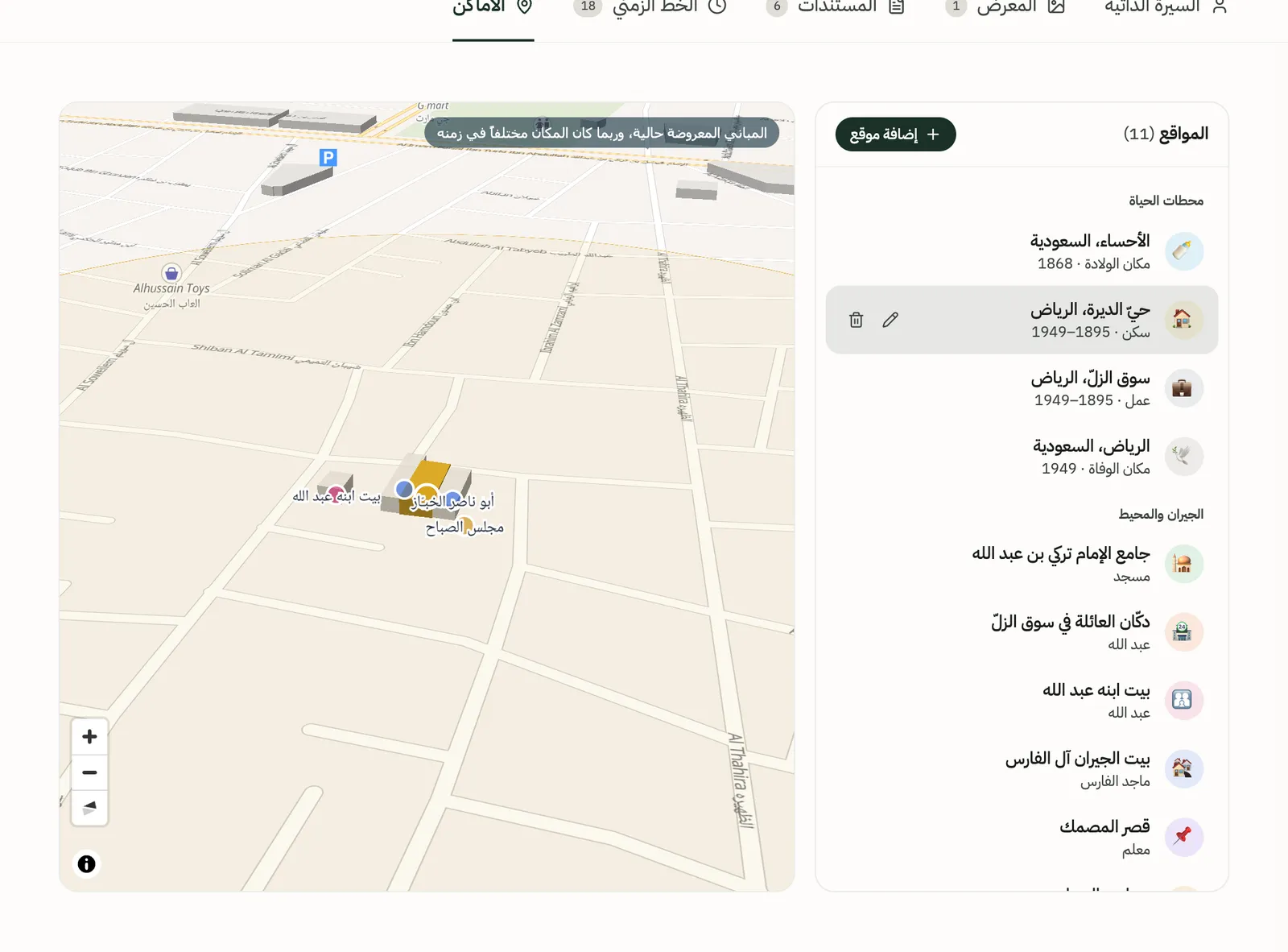
Life places and what surrounds them
Each person has their places: birth, homes one after another, work, study, death and burial. Then what surrounds the house, which matters to us as much as the house itself: neighbours, relatives who lived nearby, the mosque, the corner shop. A neighbour can be linked to their own card in the tree.
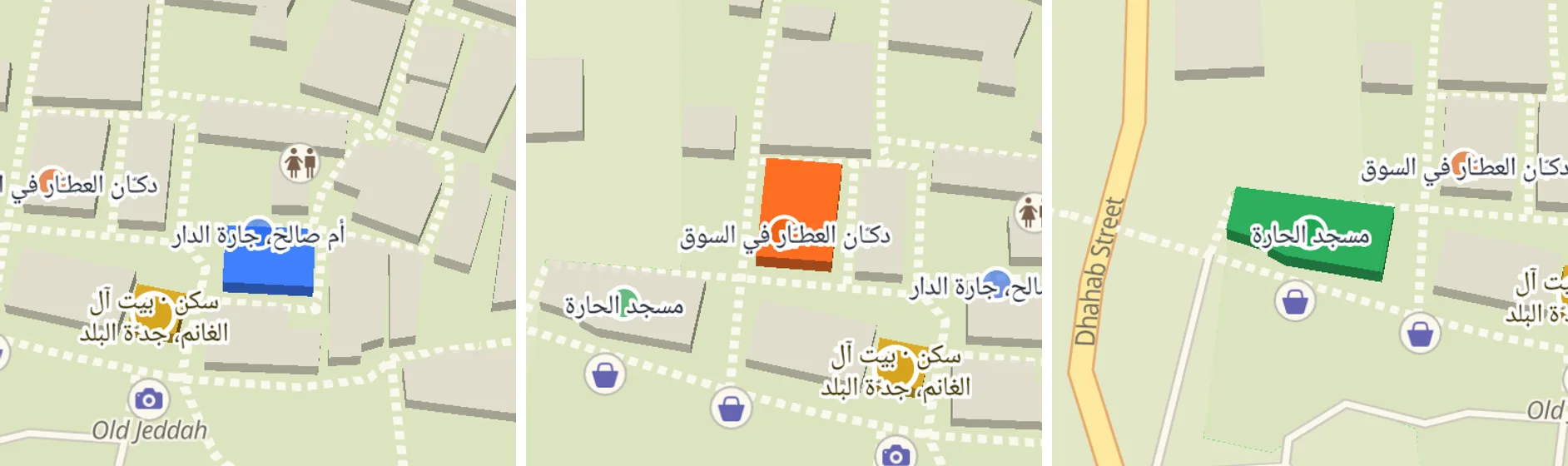
The whole building in its colour
When you choose a neighbour, a shop or a mosque from the list, the whole building lights up on the map in the colour of its type, so you see the neighbourhood as it was: the neighbour's house here, the shop there, the mosque at the end of the lane.
As precise as you know
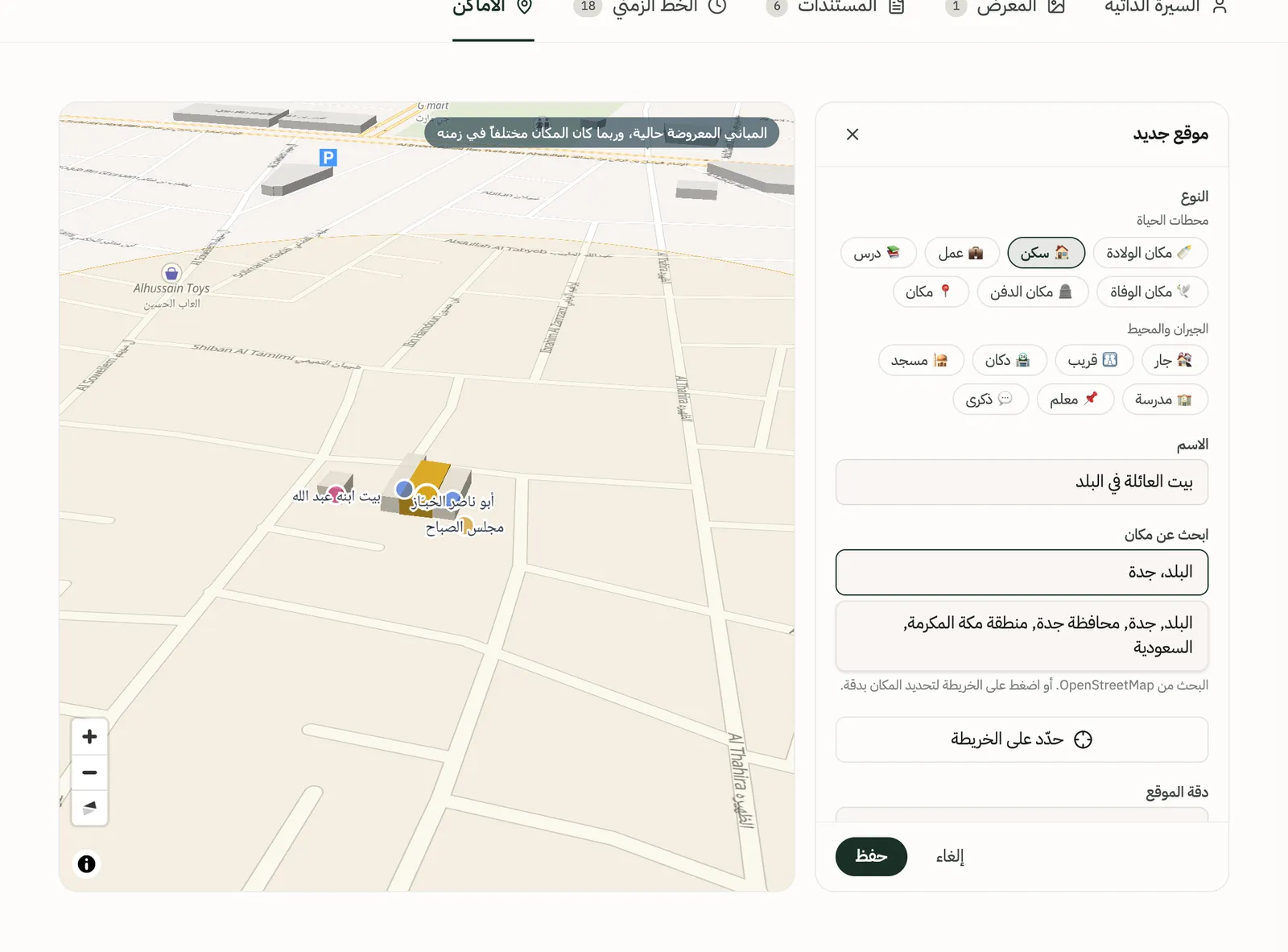
We never show a place as more precise than it is: a place added at district or city level is shown that way, not as a particular house. Places are part of your tree, visible only to people with access to it.
We wrote a longer article on Places, on why place matters in Arab family history, with a full tour of the demo family.